
Affiliate disclosure: Baking Gear Lab is reader-supported. When you buy through links on this page, we may earn a commission at no extra cost to you.
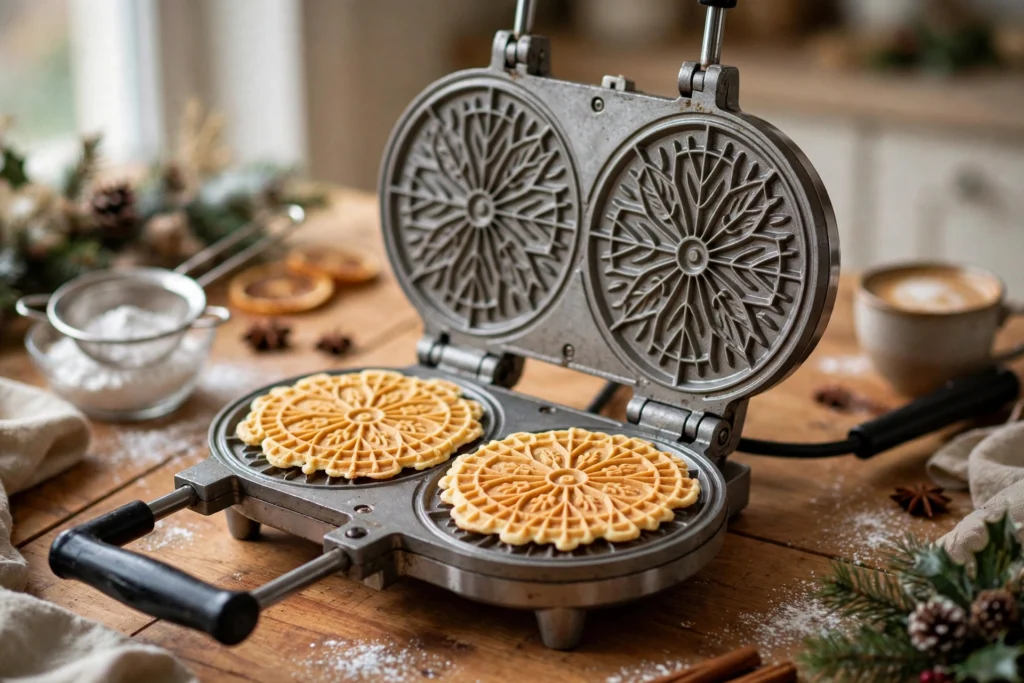
Some pizzelle makers are appliances. The C. Palmer 1000 is an heirloom. Handmade in Pennsylvania since 1983, with heavy cast aluminum plates and long locking handles, it’s the iron that serious pizzelle bakers pass down — and the one that frustrates beginners who expect nonstick convenience.
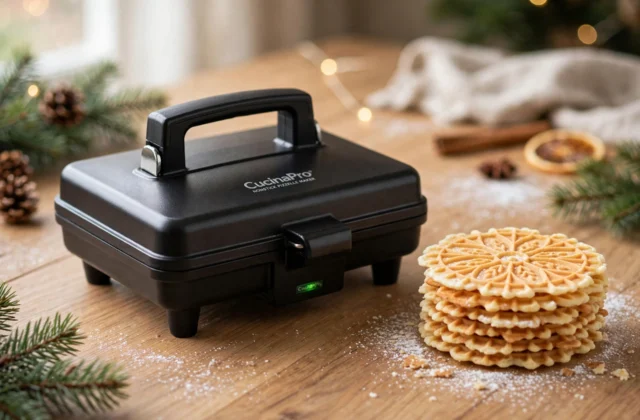
In this review, we break down what the Palmer 1000 does brilliantly, where it asks for patience, and how it compares to the CucinaPro 220-05P — its main rival at half the price.
Quick Verdict
Best for: Traditional pizzelle bakers who value build quality and are willing to learn an iron.
The Palmer 1000 makes exceptional pizzelles — crisp, thin, and perfect for rolling into cannoli shells. Its cast aluminum plates deliver even heat and decades of durability. But it’s not nonstick: the first batches will stick until you season it, there’s no indicator light or timer, and it costs roughly twice the CucinaPro. If you want heirloom quality and don’t mind a learning curve, this is the one. If you want easy, the CucinaPro is the simpler pick.
C. Palmer 1000: Key Specs
| Brand | C. Palmer |
|---|---|
| Model | 1000 |
| Power | 800 W |
| Output | Two 5-inch pizzelles per batch |
| Thickness | ~0.27-inch, rollable into cannoli shells |
| Plates | Cast aluminum — not nonstick |
| Build | Made in USA (West Newton, PA) |
| Handles | Long, with locking clip |
| Weight | ~6.0 lbs |
| Indicator | None — no light or timer |
| Cleaning | Bristle brush only, no soaking |
What the Palmer 1000 Does Brilliantly
- Cast aluminum heat, honestly distributed. Once at temperature, pizzelles come out evenly golden — no pale centers, no burnt edges. The core reason owners keep these for decades.
- Made in the USA, built like a tool. Heavy plates, long handles with locking clip, almost nothing to break. A machine you buy once.
- Thin, crisp, rollable pizzelles. ~0.27-inch cookies roll into cannoli shells and waffle cones while warm.
- No coatings to fail. No nonstick layer to degrade — just seasoned aluminum that gets better with use.
Where It Falls Short
- It’s not nonstick — and it means it. Plates will stick on first batches; season with cooking spray and build up over time. The #1 owner complaint, entirely about expectations.
- No indicator light, no timer. Timing is pure feel. The CucinaPro has a ready-light; the Palmer gives you nothing.
- Heavy and bulky. ~6 pounds of iron with long handles takes real counter and cabinet space.
- Pricier than the CucinaPro. Roughly twice the price with a steeper learning curve.
- Brush-clean only. Plates can’t be soaked or go in the dishwasher.
Palmer 1000 vs CucinaPro 220-05P
| Palmer 1000 | CucinaPro 220-05P | |
|---|---|---|
| Plates | Cast aluminum (not nonstick) | Nonstick coated |
| Output | Two 5-inch pizzelles | Two 5-inch pizzelles |
| Indicator | None | Ready light |
| Build | Made in USA, ~6 lbs | Imported, lighter |
| Cleaning | Brush only | Easier (nonstick) |
| Price | ~2x the CucinaPro | Budget-friendly |
| Learning curve | Steep at first | Gentle |
Rule of thumb: buy the Palmer if you want the heirloom — the iron you’ll still be using in 20 years. Buy the CucinaPro if you want pizzelles this weekend with zero learning curve.
Read our full CucinaPro review.
See how both rank in our Best Pizzelle Maker 2026 roundup.
Who Should Buy the Palmer 1000
- Traditional bakers (Italian families, holiday purists)
- Cannoli-shell makers (thin, rollable output is the point)
- Buy-it-once buyers
- Made-in-USA shoppers
Who Should Skip It
- First-time pizzelle bakers (the CucinaPro forgives; the Palmer teaches)
- Convenience-first buyers
- Tight budgets
- Small kitchens
Gifting Note
The Palmer 1000 is one of the genuinely great Christmas gifts for a baker who already has everything — the kind of heirloom tool people don’t buy for themselves. See our Pizzelle Maker Gift Ideas for how to bundle it.
Frequently Asked Questions
Palmer 1000 vs 1000T — which should I buy?
The 1000T has a nonstick coating; the classic 1000 is bare cast aluminum. For the traditional experience, buy the 1000.
Palmer 1000 vs CucinaPro 220-05P — which is better?
The Palmer is the heirloom (American-made cast aluminum, steeper learning curve, ~2x price); the CucinaPro is the easy button (nonstick, ready light, budget-friendly).
Does the Palmer 1000 need to be seasoned or oiled?
Yes. Owners season the cast aluminum plates with cooking spray before and during early use; sticking drops dramatically once seasoned.
Can it make cannoli shells and waffle cones?
Yes. The ~0.27-inch cookies are thin and pliable when warm; roll them around a form immediately and they set into crisp shells and cones.
How do you clean it?
With a bristle brush, dry. The plates can’t be soaked, scrubbed with water, or put in the dishwasher.
Why is there no indicator light or timer?
Palmer’s design philosophy: fewer parts, fewer failures. Owners time batches by feel — typically under a minute per pair.
Is it really made in the USA?
Yes — C. Palmer Manufacturing is in West Newton, Pennsylvania, making pizzelle irons since 1983.
Final Verdict
The C. Palmer 1000 is the best pizzelle iron for the baker who wants the real thing — cast aluminum, American-made, built to outlive its warranty by decades. It’s not the easiest iron, and it’s not the cheapest. But once seasoned and learned, it makes pizzelles that no nonstick competitor quite matches.
Still comparing? Our Best Pizzelle Maker 2026 roundup ranks every top pick side by side.
Affiliate disclosure: As an Amazon Associate we earn from qualifying purchases.